Case Study: Little Leaf Shop
A Plant ecommerce site gets a UX boost

Project Brief
As a designer working on an ecommerce project over a 2 week sprint, I was thrilled to present my proposal for a local fave here in California, called Bunk Ass Plants. Sadly, my proposal was rejected, but undeterred I focused my resources on another plant retailer, almost as cool.
My design challenge was to optimize the usability and information architecture on the plant and lifestyle website, Little Leaf Shop. Along the way, many other elements of user interface — layout, elements, features, flow, navigation — were reimagined, to bolster user engagement and a sense of community for customers.

Market Space
Little Leaf is a boutique plant shop in the heart of DC, with a growing online presence and a tight knit, niche, passionate user base of houseplant hobbyists. This curated lifestyle shop seeks to allow for precision in plant selection and 1:1 care guidance. The founder wants to foster an interactive vibrant community for crowd sourcing care tips, gaining ideas and inspiration, and emboldening home horticulturists.
Since 2020, the opportunity for plants as a key feature of interior design has burgeoned: People are decking out their home offices, devoting resources to home renovations, and seeking calmness and peace by bringing nature indoors.
Entrepreneurs are taking notice, and have created innovative businesses, with custom plant design mixed with wine and art, and outsize landscape architecture including sculptures and geometric plant walls. Phenomenal.
My primary objective was to design a new website that boosted sales and time on site. I aimed to:
– Make the site more inclusive and accessible for new and returning customers
– Streamline the checkout and pickup/delivery processes
– Employ design principles to build a site that’s perceivable, operable, robust, and understandable
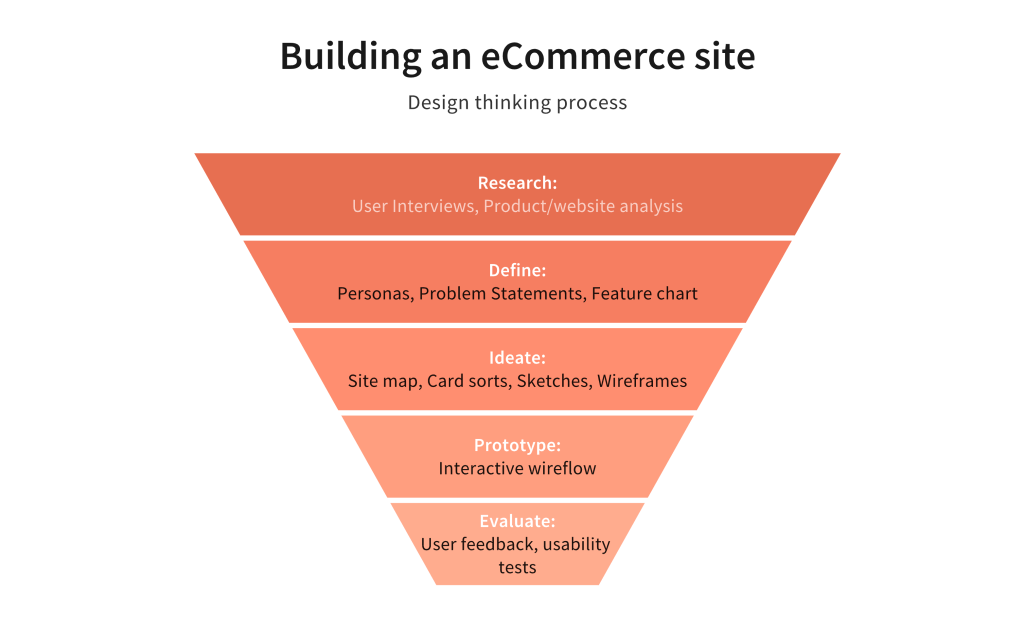
I adhered to best practices in information architecture and user interface design, to bring to life the vibrance of the plants themselves, through Little Leaf’s site. I sought to integrate plant trends with the business’s reach, branding, and audience to craft a beautiful UX that effectively grew online sales.
CHALLENGES
As a starting point, and to determine a targeted approach to achieve the desired results, I interviewed devoted plant carers, those looking to pursue this interest, and plant shop owners. I asked open-ended introductory, topic specific and product opportunity questions:
How you do interact with plants or a garden in your typical week? Tell me about any hobbies that relate to plants or time amongst nature. Why is gardening important to your life?
How do you go about finding and choosing new plants? Describe your biggest pain point with buying and caring for indoor plants. What workarounds have you discovered that help you with this problem?
What is most surprising to you about your relationship with plants and how they fit into your life? What do you love most about visiting plant shops that is missing on a plant website? How do you envision expanding your love of gardening in the future?
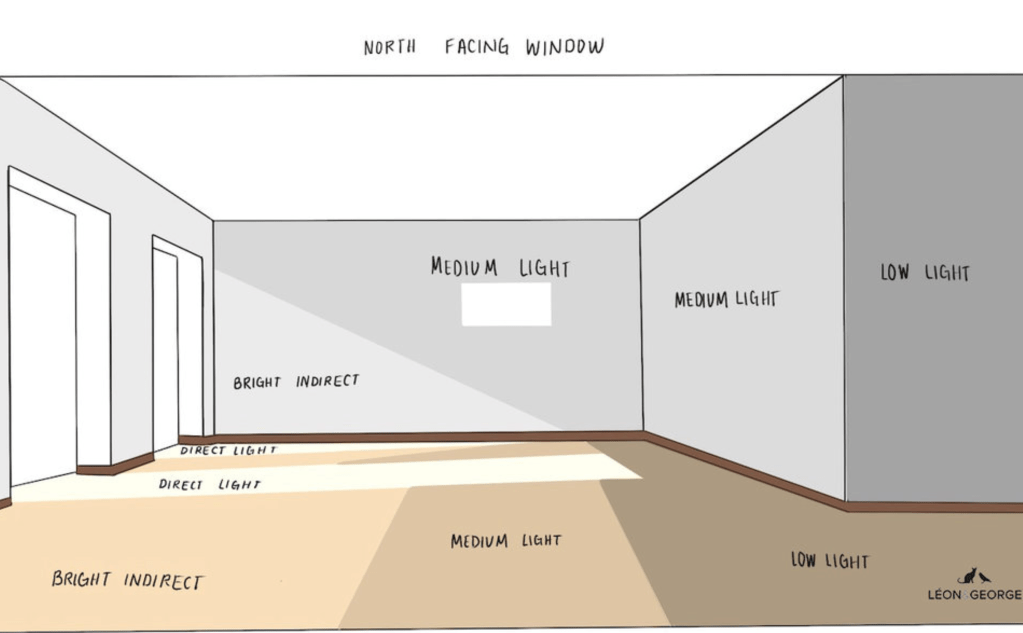
CUSTOM PLANT SELECTION
Plant lovers want several, high quality photos of the exact plant they will purchase, from multiple angles, with a realistic scale of the plant’s dimensions. Though unique in e-commerce, I believed that to the extent this was feasible and viable, it would create excitement and connection between user and product, and be a personal touch the customers would love.
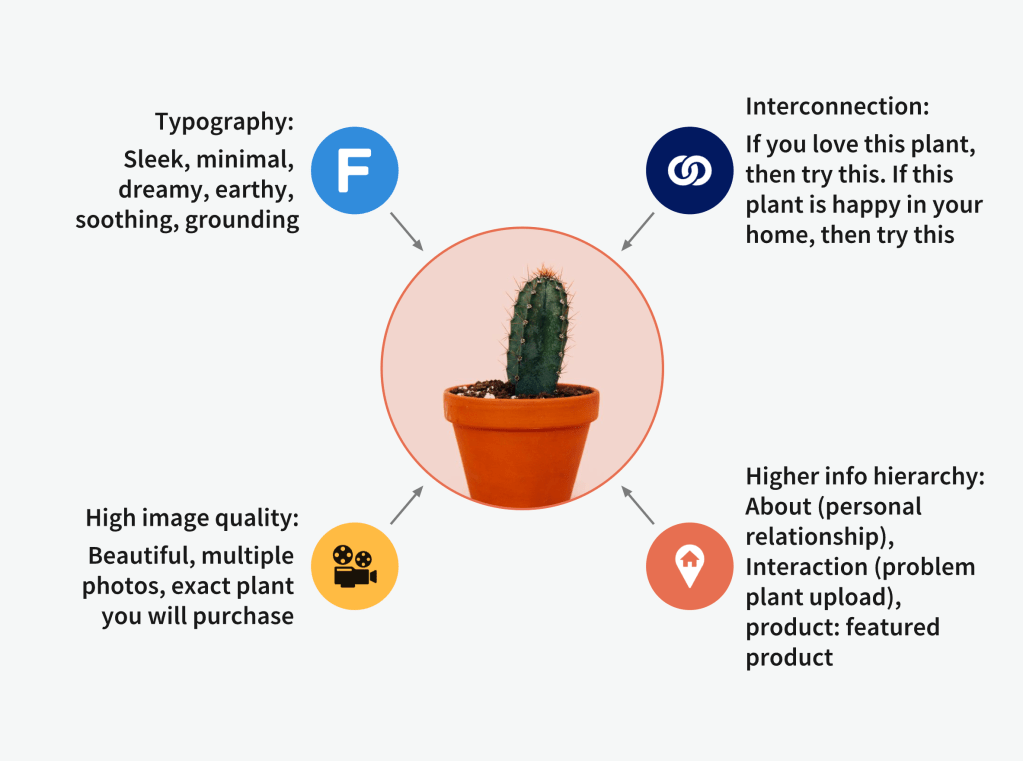
I conducted a suite of design exercises, to highlight primary areas of improvement while designing the website: Shipping, community, education, inspiration, emotional needs, and a frictionless UI were the top subjects I identified as unmet needs.

My research into behavioral root causes showed that users value continual education, in pursuit of adeptness in plant care — but more importantly they need affirmation and validation that their efforts are worthwhile and productive. They value community and belonging, lifestyle, feeling adult, and plants tailored to their individual preferences and their homes.
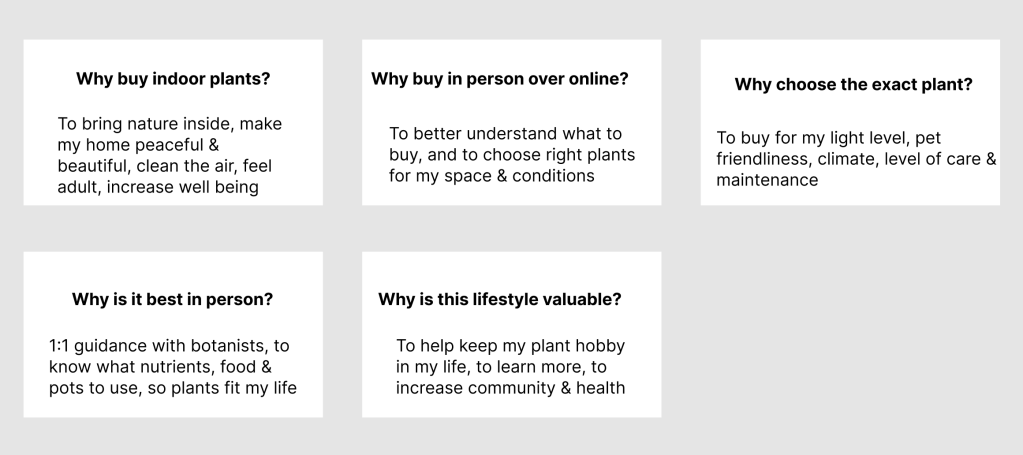
Define (the real problem).
All about Interviews
I love interviewing, and look to the GOATs to see how my recordings and transcripts can improve. Their takes:
Choose what you’re interested in (when you’re interested, you’re interesting), research using high quality sources, spend time prepping, organize information beforehand, utilize your team (have capable collaborators), use a script but go where the conversation goes, be humorous and positive, ask the tough questions to get to the heart of an issue, choose honesty over politeness, set people up to present their best selves, give people opportunities to make their cases.
Utilizing these practices plus my experience as a psychology researcher, I conducted five extensive interviews for background research. I defined three audiences, guiding my recruitment and selection of interviewees:
- Business owners: To ambitious entrepreneurs with expanding online sales, I asked about their pain points with pick up and deliveries, how they engaged with their users and established their brands, and what their top business goals were
- Frequent plant shoppers: These people are very passionate and knowledgeable about plants. I asked them how they chose plants, how they chose where to shop, and what could be improved about their experiences
- Newbies (those new to owning plants): This group is skeptical, curious, and timid about the time commitments and cost of plants. I asked them to describe what’s preventing them from buying plants, what information they are lacking, and where they get confused or abandon their pursuit of indoor gardening
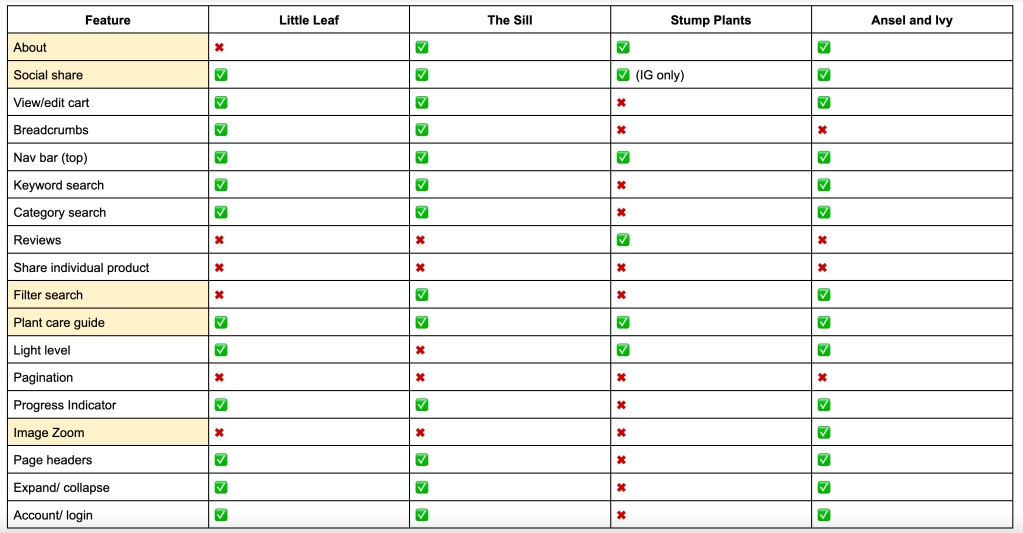
Competitive Analysis: E-commerce competitors and threats
I performed critical evaluations of leading plant online retailers. Noting navigation errors, and number and severity of UI violations, allowed me to compare the sites objectively. Conducting business case outlines elucidated how the brand’s identity, strategy and audience influenced the UX as a whole, within this market space.
Heuristic Evaluation
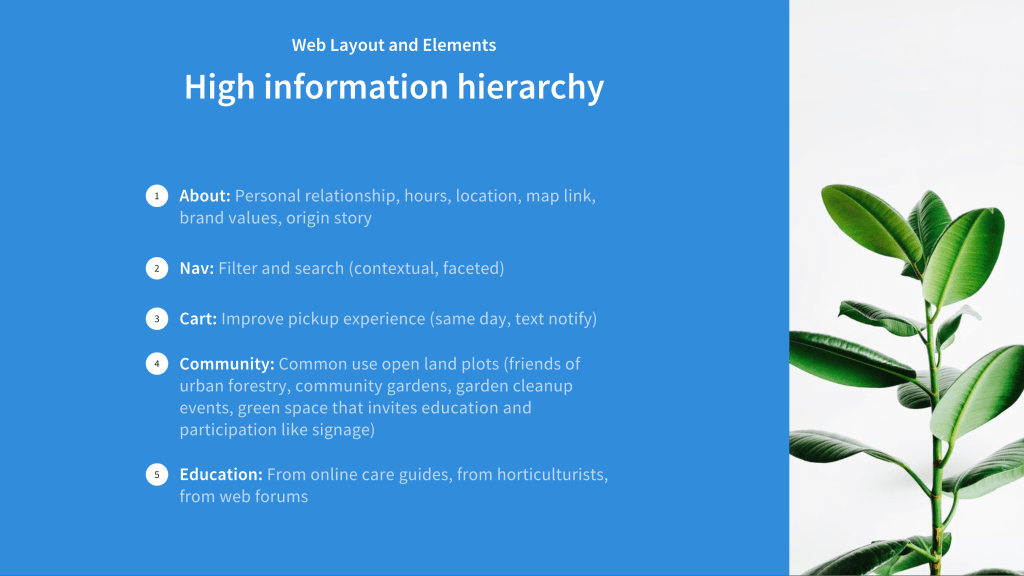
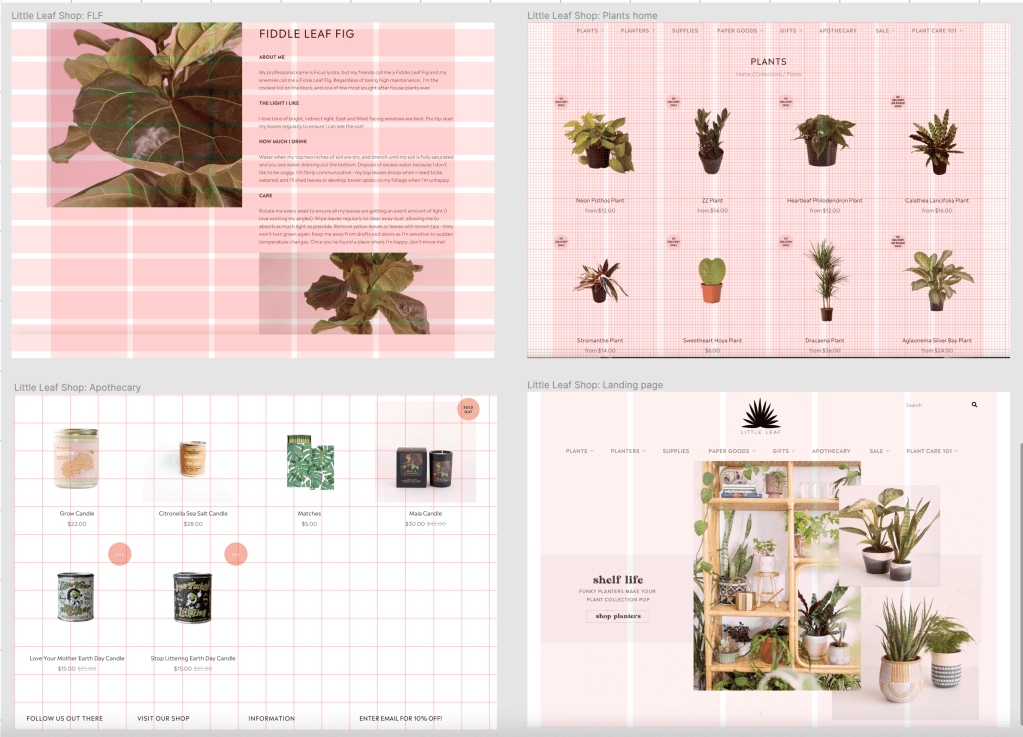
I assessed Little Leaf’s web layout and elements, performed task analyses, and conducted an information hierarchy audit and open card sorts.
PERSONAS
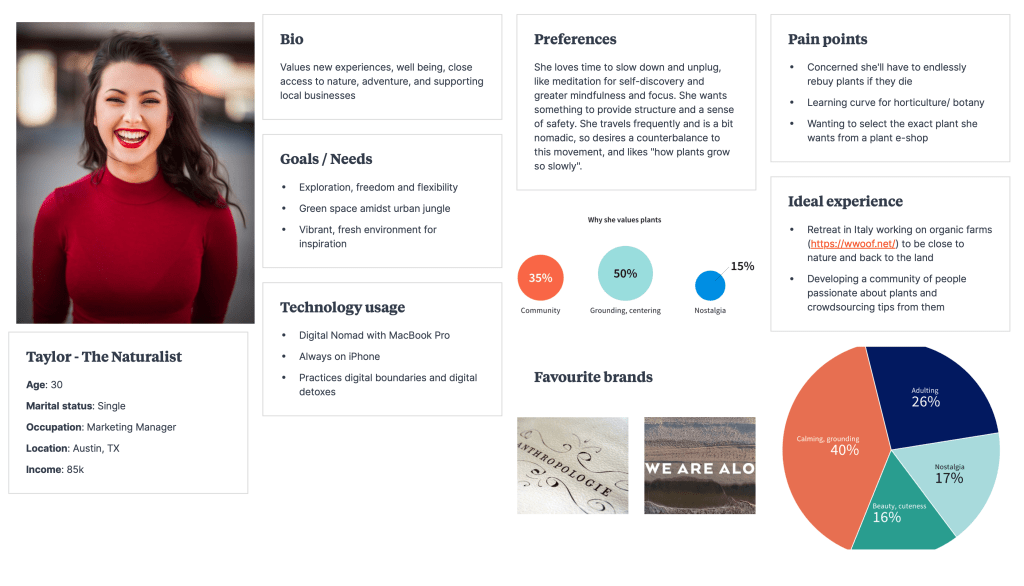
To discover user behaviors and motivations, I identified personas, then created a journey map, highlighting the UX for the current UI.
Understanding our audience
I categorized the personas as 3 archetypes: Naturalist, Nurturer and Throwback. Empathizing with these groups was paramount to synthesizing my research findings effectively.
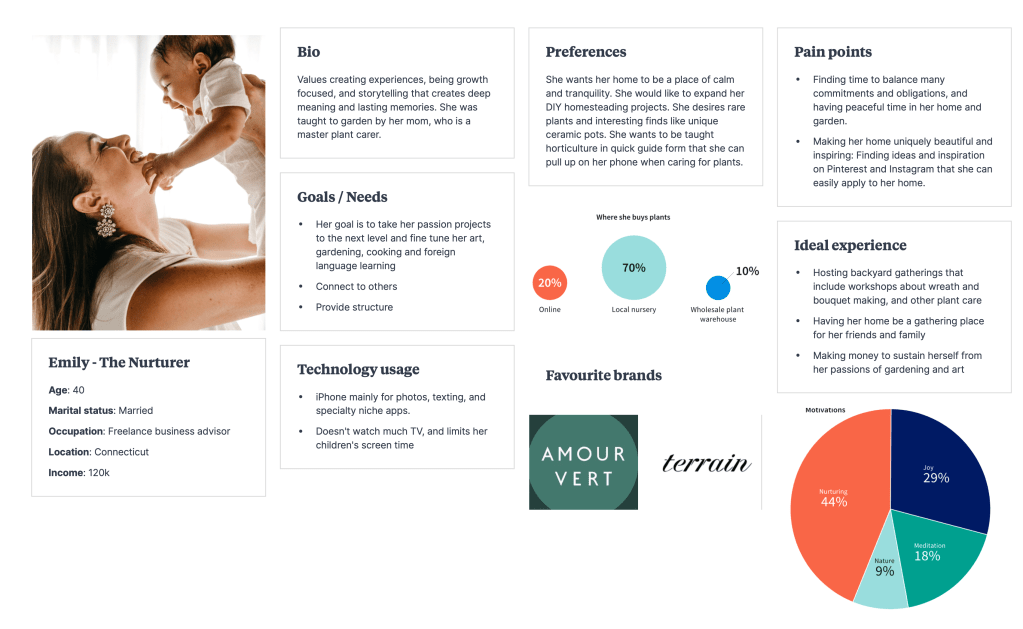
Key Findings.
My interviews validated my observation about the gung-ho passion of houseplant hobbyists, and the high number of plants each user buys. My research showed people desire a back to basics, clean, elegant, simplicity in their lives — and that plants provide this within their homes.
There’s a reason the pandemic sharply increased nature seekers (plant collectors among them): This increase of hiking, biking, camping, and other outdoor activities came about not due to restrictions and closures, but as self-care during uncertainty.
I found four main needs being fulfilled by people’s interests in plants. Hearing people’s stories was deeply moving, and motivated me to find out how I could further help them pursue this passion.
Four trends in user needs:
- Education: Gathering & transmitting knowledge compliments the communal nature of gardening, planting, growing. Users told stories about their moms, aunts, grandmas tending to gardens and how that impacted their upbringings
- Getting outside yourself: Having something to care for allows one to be outside oneself, be more meditative and in a peaceful state of relaxed flow
- Crowdsourcing tips via community: Users like to post plant photos and ask for care solutions, for the solidarity, sharing and sense of acts of service
- Nostalgia: Plants are grounding and centering at a time when young adults are nomadic and aren’t yet buying homes. It’s a way to slow down, feel rooted, remember simpler times
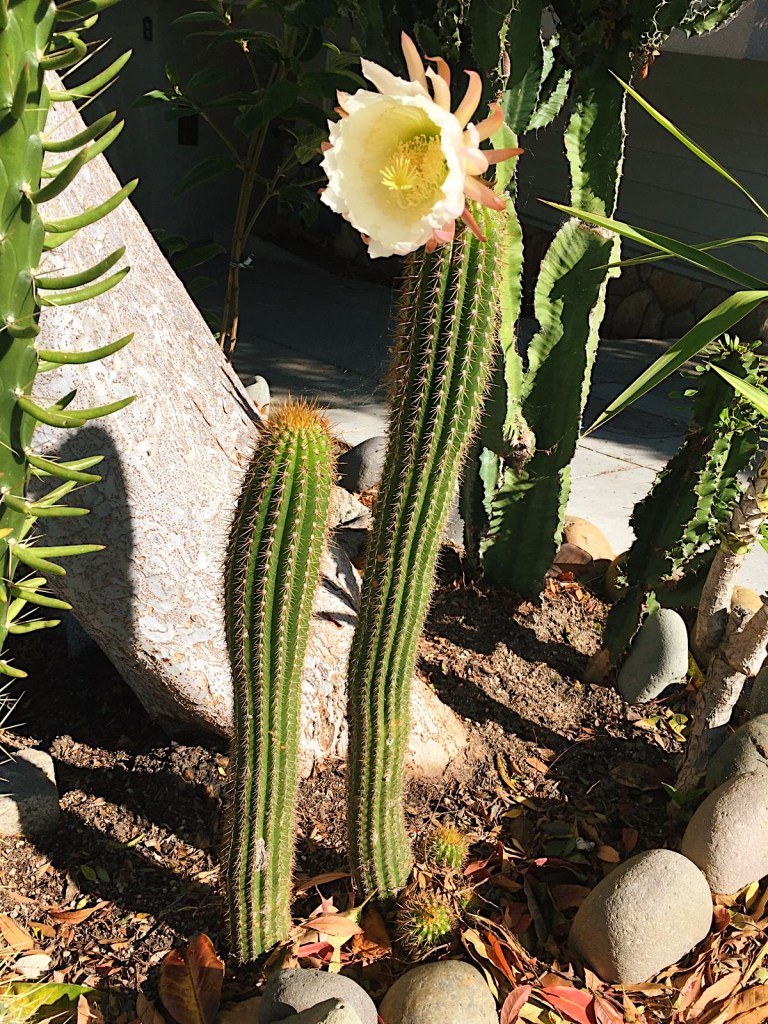
Finding relationships
I utilized independent research for inform my design.
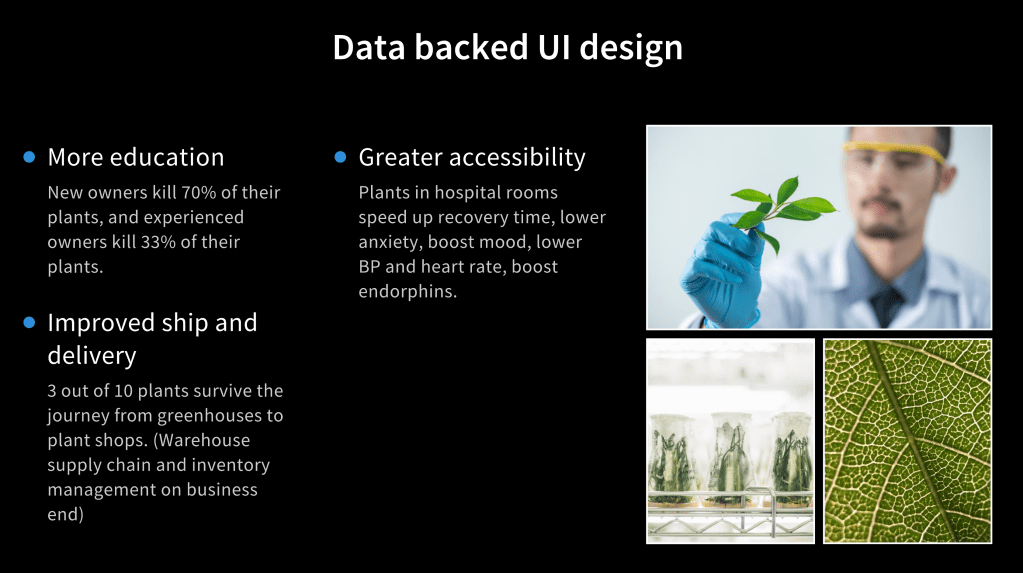
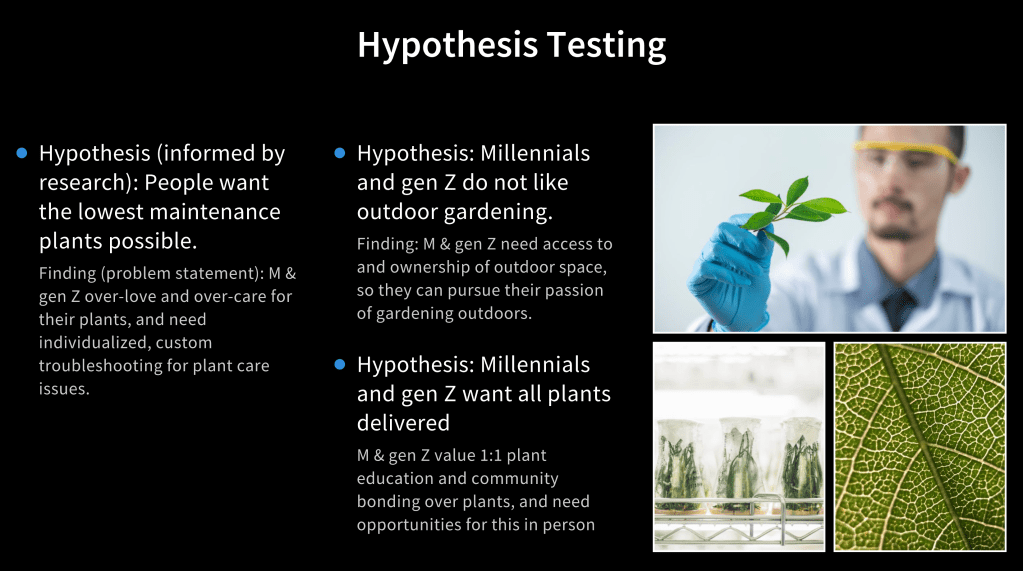
PROBLEM STATEMENT
To pinpoint the core problem and craft a real solution, I did a thorough research review while asking myself tough questions, to continually hedge against my own biases as a nature lover: What stands out most? What surprises me? What challenges my point of view? What evidence validates my work thus far?
Plant hobbyists desire the ability to curate indoor gardens that fit their aesthetic and lifestyles, therefore need education about plant care that combines design expertise with adaptability to their environments.
SKETCHES
Since most site features aid usability, I focused on web elements that needed the most improvement, based on my research and evaluation.
Sketching the About page, main navigation, and cart process helped me visualize what to prototype, and how to polish my ideas. My sketches improved the UI:
– Added breadcrumbs so a visible path leads to plant care tips without leading to cart abandonment
– Social links refined for brevity, while a social share feature was added for individual products
– Used progressive reduction for all logos and icons
– Added filtered search to enhance discoverability
Deciding upon a solution
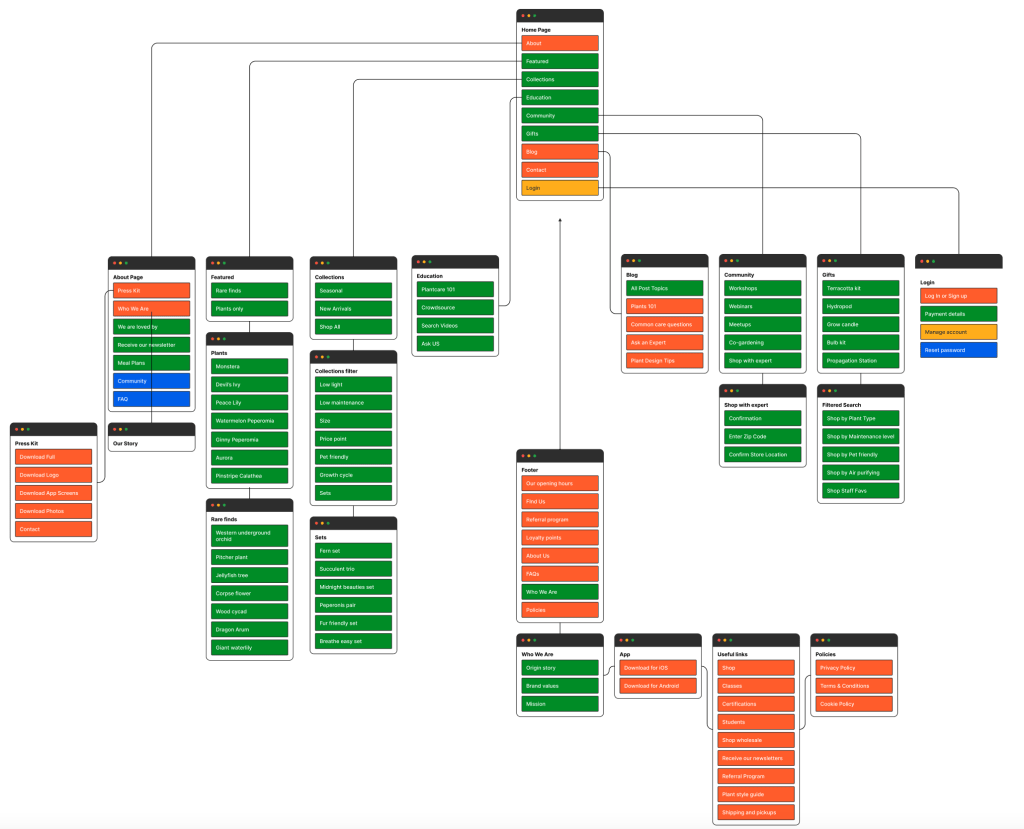
My site map confirmed a logical userflow.
Prototyping
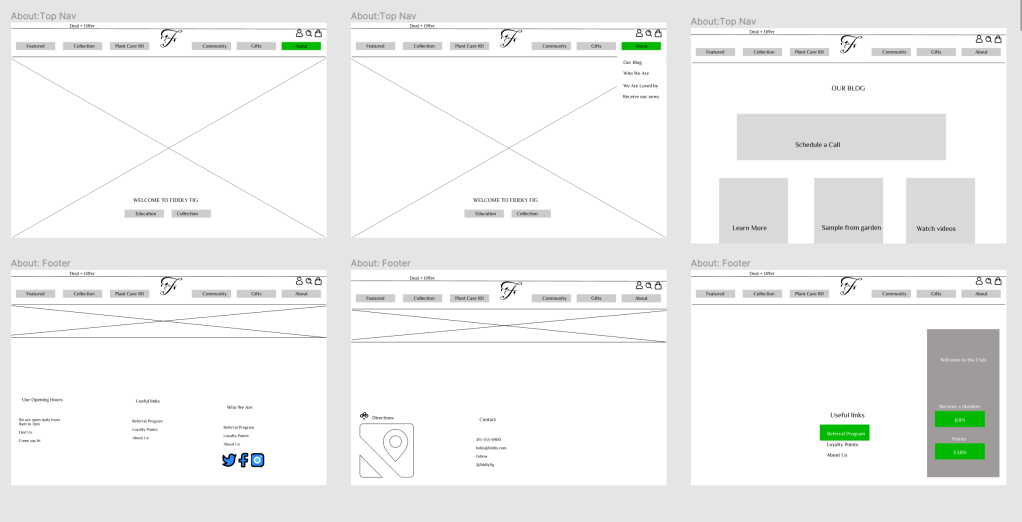

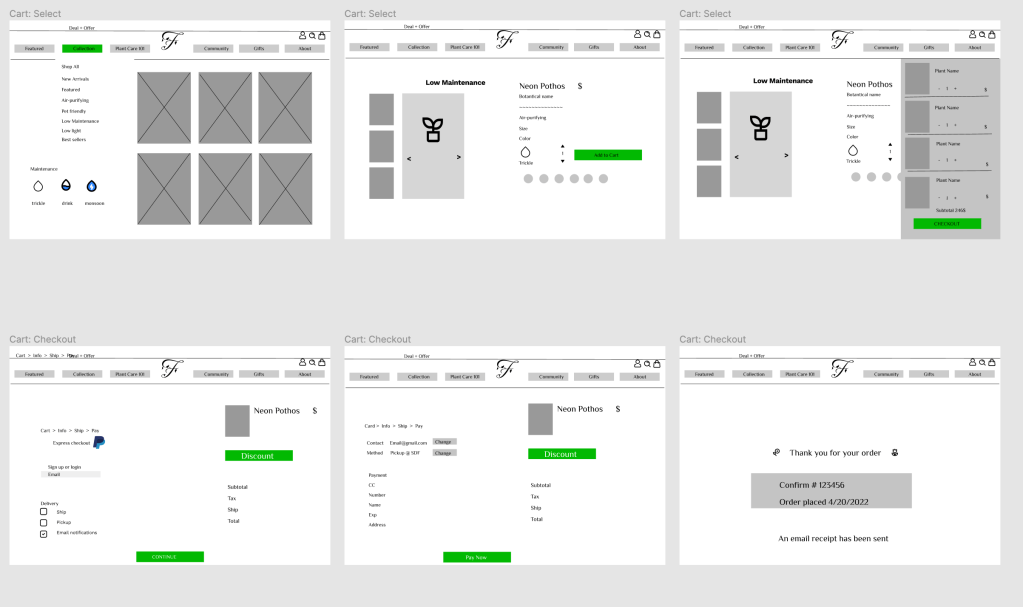
Prototypes catered to different approaches in shopping for plants and different visual styles. In addition to providing feedback and direction, wireframes quickly summarize and communicate the most important content on each page.
For usability testing, I re-recruited my 5 plant lovers to evaluate my prototypes. I summarized my findings by whiteboarding and contextual inquiry.
NEXT STEPS.
Expand wireframes: Further build out prototype interactivity in higher fidelity
User feedback: Conduct more task and element analyses, feedback surveys and additional testing
Expand reach: Expand site to outdoor plants, and include opportunities for community (step gardens on public stairways, community gardens, neighborhood garden cleanups, living roofs)

Reflection
Completing this UX project in endemic times, I was struck by the ‘stickiness’ of people’s habits they picked up during this time — and the joy they experienced from them. What a testament to the value of living simply, and bringing nature into one’s life in an essentialist form. Being surrounded by greenery while cooking or working was a balm for many, during a time of unrest.
The Freakonomics podcast had this quote: “It has been said that necessity is the mother of invention, but disaster may be an even bigger Mother.”
Disasters spur people to try new technologies, and adoption picks up amidst crises as people are more willing to try new things. I keep this tendency in mind in my design process, as bold technologies have greater adoption, in our current global landscape. When possible, I pair my designs with sustainability, for our collective futures and societal well being.

Connect
Follow me on Twitter, LinkedIn and Medium for my latest blog posts and exclusive content. Email me to chat about sustainable design or to say hi!
 Jennifer parks